Key Takeaways
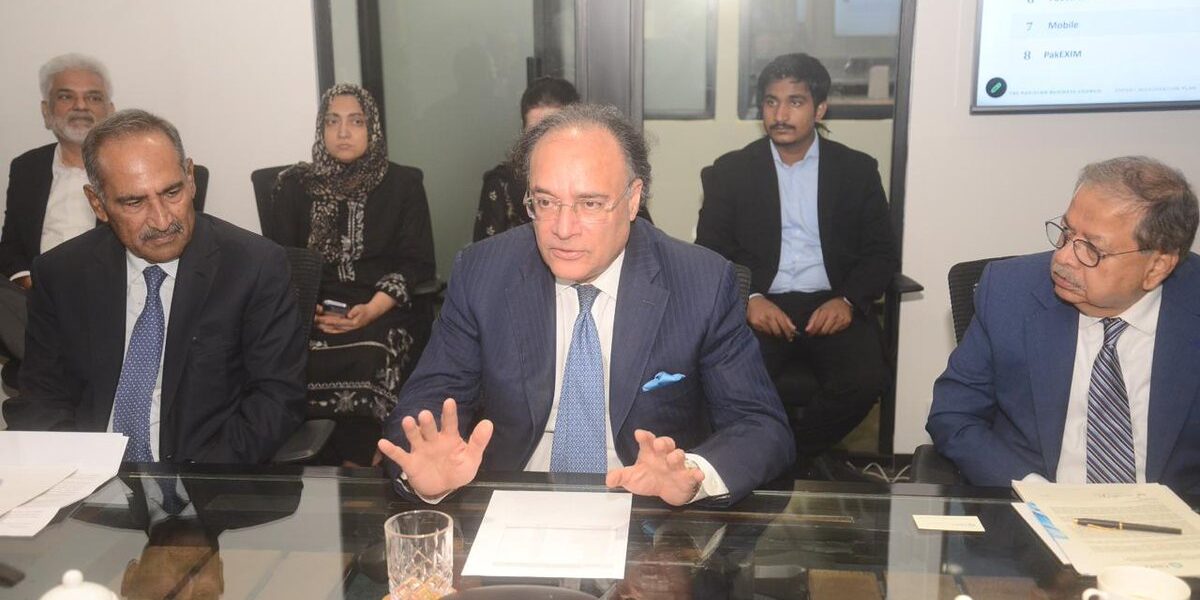
- Finance Minister Senator Muhammad Aurangzeb met with members of the Pakistan Business Council in Karachi.
- The meeting focused on economic reforms, policy continuity, and the Government's budget preparation process.
- The Finance Minister underscored the importance of a stable tax policy framework for business confidence.
Finance Minister Senator Muhammad Aurangzeb held a meeting with members of the Pakistan Business Council (PBC) during his visit to Karachi, focusing on economic reforms and policy continuity. The meeting highlighted the Government's commitment to engaging with the private sector in shaping future fiscal policies.
During the discussion, Senator Muhammad Aurangzeb acknowledged the role of PBC as a platform for constructive dialogue between the Government and the business community. He expressed appreciation for the council’s efforts in bringing together leading representatives from various sectors to address key economic issues.
The Finance Minister emphasized that Pakistan must continue pursuing its reform agenda to strengthen macroeconomic stability, improve competitiveness, and support sustainable economic growth. He noted that the global economy had demonstrated greater resilience than anticipated, with countries committed to structural reforms better positioned for economic stability and growth.
Highlighting the Government's approach to budget preparation, Senator Muhammad Aurangzeb stated that the meeting marked the beginning of consultations for the next federal budget rather than a post-budget review. He noted that the Government had initiated the budget preparation process significantly earlier this year, enabling a more structured and consultative approach to fiscal planning.
The Finance Minister also underscored the importance of policy predictability and reaffirmed the Government's commitment to implementing a Medium-Term Tax Strategy. He stressed that a stable and consistent tax policy framework remained essential for strengthening business confidence, encouraging investment, and supporting long-term economic planning.
Representatives from the Pakistan Business Council highlighted the council’s role as a broad-based national business advocacy platform and underscored the importance of continued engagement between the Government and exporters from various sectors to support export-led growth. They emphasized that such collaboration was crucial for fostering a conducive environment for investment and sustainable economic growth.
In related news, the International Monetary Fund (IMF) has projected global growth to be 3.0 per cent in 2026 and 3.4 per cent in 2027, down from an average of 3.5 per cent observed in 2024-25. The modest slowdown reflects the effects of the renewed Middle East conflict being partly offset by accelerated demand-driven momentum in the global technology cycle thanks to advances in artificial intelligence (AI) and its adoption.
Despite Pakistan being one of the most affected nations in the US-Iran conflict, with disruption of fuel supplies through the Straits of Hormuz, the IMF kept its growth rate forecast unchanged at 3.5 per cent for the current year and 3.6 per cent for the just concluded fiscal year (FY26). This was attributed to successful completion of the third review of Pakistan's $7 billion extended fund facility in May.