Key Takeaways
- The Cabinet Committee on state-owned enterprises rejected a request from Sui Southern and Sui Northern for an exemption from international accounting standards.
- Finance Minister Muhammad Aurangzeb instructed further deliberations with relevant divisions before reconsidering the proposal.
- The rejection was due to opposition from the Finance Ministry’s Central Monitoring Unit, which monitors SOEs under IMF requirements.
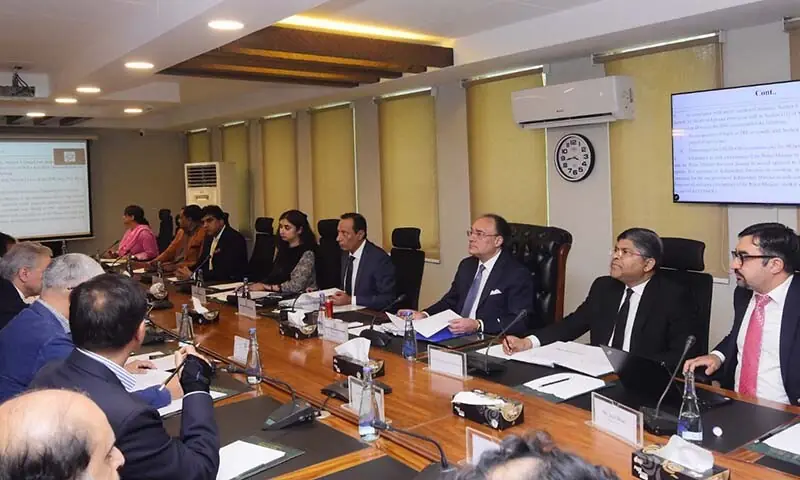
In a significant development for Pakistan's energy sector, the Cabinet Committee on state-owned enterprises has denied requests by Sui Southern and Sui Northern Gas Utilities for an exemption from international accounting standards. The decision was made during a meeting chaired by Finance Minister Muhammad Aurangzeb.
The two gas utilities, which are grappling with circular debt worth Rs3.44 trillion, had sought relief to avoid being declared insolvent under the International Financial Reporting Standards (IFRS-14 and IFRS-9). According to an official statement, the Petroleum Division initially proposed a three-year exemption for specified energy-sector state-owned enterprises.
However, the Finance Ministry’s Central Monitoring Unit (CMU) opposed this move, citing concerns over transparency and compliance with the SOEs Act 2023. The CMU argued that applying IFRS-9 and IFRS-14 would ensure proper financial reporting and footnoting of receivables under the circular debt management plan currently being discussed with the IMF.
Finance Minister Aurangzeb observed that such an exemption could not be granted while the SOEs Act 2023 remained in effect. He directed that the matter be thoroughly deliberated, emphasizing its serious nature and the strong opposition from the CMU. The cabinet committee instructed further discussions between the Petroleum Division, Finance Division, and Law and Justice Division to submit a revised proposal for consideration.
The rejection also extended to appointments of two board members, one each from the Petroleum Division, to the boards of directors of Pakistan Petroleum Limited (PPL) and Sandak Metals Limited (SML). The cabinet body found these appointments contrary to good governance standards. However, it approved other board members for these SOEs.
The decision reflects a broader commitment by the government to maintain transparency and adherence to international financial reporting standards in state-owned enterprises. This move is expected to have significant implications for the financial health and accountability of Pakistan's energy sector.
Informed sources stated that similar exemptions had been availed of by these entities before, but this time, the cabinet committee was more stringent due to the ongoing discussions with the IMF on circular debt management.