Key Takeaways
- Crew of K2 Airways Flight 1732 reported navigation system failure at 9:18pm on July 7.
- The aircraft descended rapidly, reaching a rate of 22,400 feet per minute before crashing into the sea.
- Investigation suggests IRU failure and spatial disorientation as leading causes.
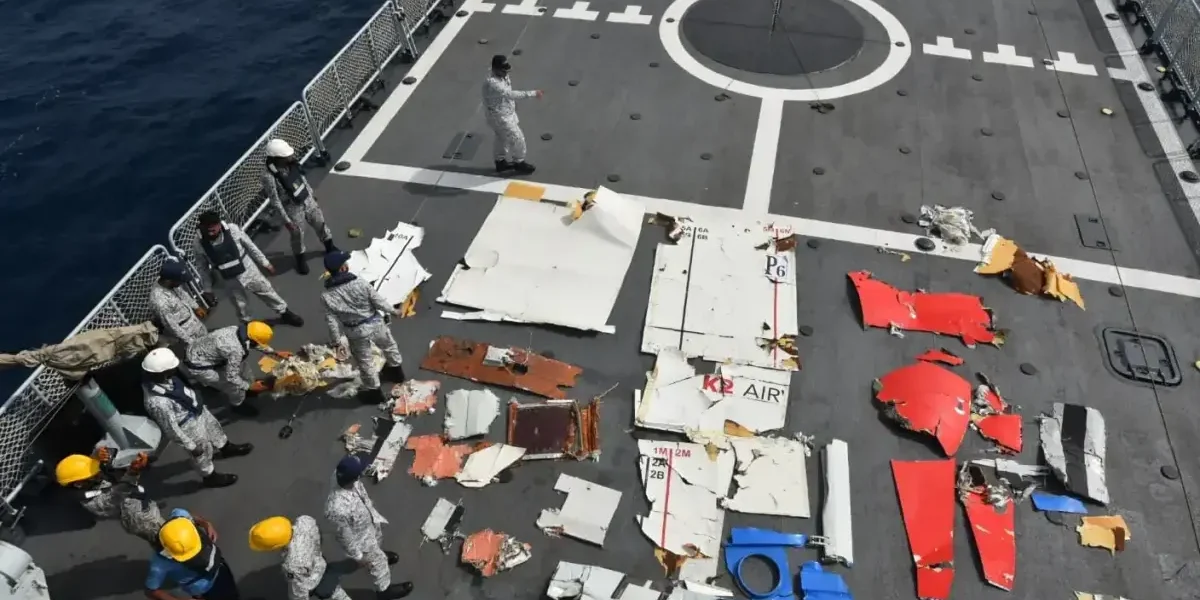
K2 Airways Flight 1732, a Boeing 737-400, experienced a catastrophic plunge into the sea on July 7 at 9:18pm (0418 UTC), resulting in the death of all five crew members. The flight was en route from Sharjah to Karachi when it reported navigation system failure.
The aircraft had undergone maintenance in Sharjah prior to departure, indicating recent work that may have contributed to the incident. As findings of any investigation are awaited, several hypotheses are being explored, including Inertial Reference Unit (IRU) failure and spatial disorientation as leading causes.
Captain Muhammad Rizwan Idrees, with a career primarily in rotary-wing operations, and First Officer Faisal Jatoi, at an early stage in his airline career, were on board. The flight path passed close to an active conflict zone where clashes between Iran and the United States had resumed on the same day.
The crew reported erratic altitude excursions — a 5,000-foot descent followed by a 6,000-foot climb — loss of airspeed, and subsequent stall. These events strongly suggest IRU failure combined with spatial disorientation and a catastrophic breakdown in Crew Resource Management (CRM).
Additionally, more than 20 aircraft reported GPS spoofing along the route and near the crash site. Military activity in such areas poses significant risks to civil aviation, as states do not always issue timely NOTAMs or divert civilian traffic when air defences are activated.
A recent example is Azerbaijan Airlines Flight J2 8243, which was struck over Grozny when Russian air defences were active against Ukrainian drones but civilian traffic was neither properly notified nor diverted. This incident highlights the dangers faced by civil aviation in conflict zones.
The rapid and catastrophic loss of control suggests that the aircraft may have experienced an IRU failure, leading to spatial disorientation and a breakdown in CRM. However, the initial erratic descent followed by a 6,000-foot climb indicates that the aircraft was still intact at that stage, ruling out a sudden structural break-up.
The investigation is ongoing, with experts exploring multiple hypotheses. The findings will be crucial for understanding the cause of the crash and preventing similar incidents in the future.