Key Takeaways
- Sindh’s government will provide mini solar kits to 275,000 low-income families.
- The Rs18.2 billion project aims to benefit 132,000 off-grid and 143,000 grid-connected households.
- Distribution is set to be completed by June 2027.
Sindh’s government has announced a significant initiative aimed at providing renewable energy solutions to low-income families. In a statement on Tuesday, Sindh’s Senior Minister Sharjeel Memon revealed that the provincial administration will distribute mini solar kits to 275,000 households under a Rs18.2 billion project.
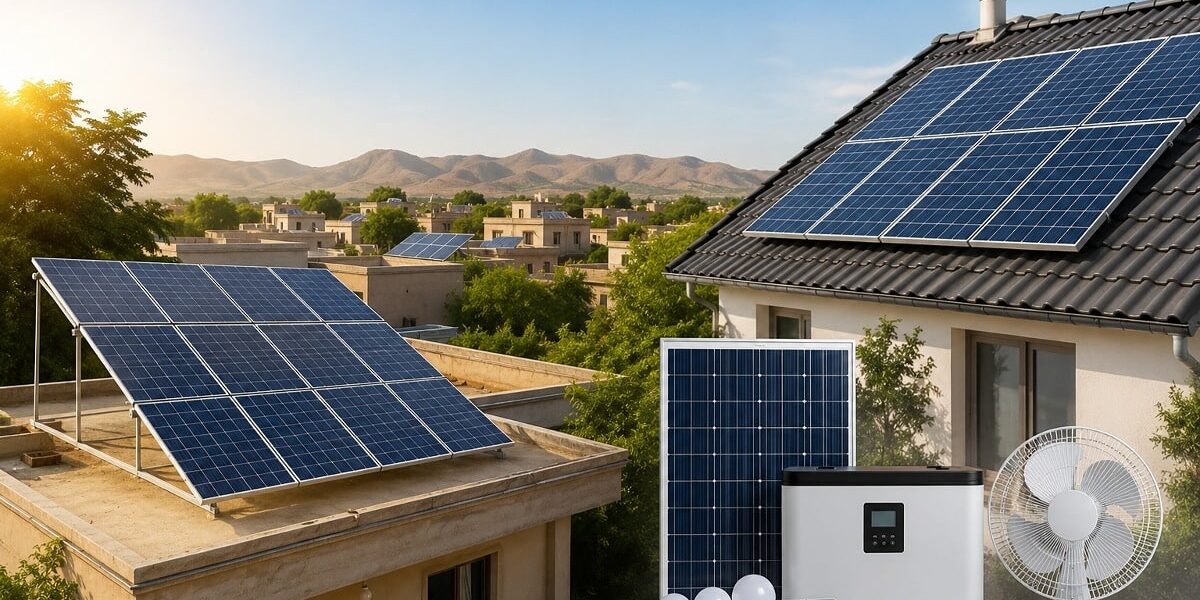
The scheme is part of an extensive effort by the government to enhance energy access in off-grid and grid-connected areas across Sindh. According to Memon, the initiative prioritises low-income families and residents living in remote regions of the province. Each family will receive a 180-watt solar panel, batteries, fans, and bulbs.
The project was launched on the instructions of PPP Chairman Bilawal Bhutto Zardari, who has been vocal about improving energy infrastructure across Pakistan. Memon stated that the government had already distributed kits to over 15,000 families as part of a pilot phase, with the aim of completing distribution by June 2027.
The senior minister highlighted the importance of this project in addressing energy poverty and promoting sustainable living among low-income households. ‘This initiative will not only provide much-needed electricity to our citizens but also empower them through clean and affordable energy solutions,’ Memon said during his announcement.
Local communities have expressed mixed reactions to the scheme, with some welcoming it as a step towards self-sufficiency in energy while others are concerned about the initial cost of installation. However, government officials maintain that the long-term benefits far outweigh any short-term challenges. ‘The solar kits will not only reduce dependency on grid electricity but also help in reducing carbon emissions,’ said an official involved with the project.
Despite the ambitious timeline, critics have raised concerns over potential delays and logistical issues. A spokesperson for a local non-governmental organisation (NGO) working on energy access projects stated, ‘While we support such initiatives, it is crucial that the government ensures proper planning and execution to avoid any setbacks.’
The project is expected to create jobs in manufacturing, installation, and maintenance of solar kits, contributing to the local economy. Additionally, it aligns with the national government’s broader goals of promoting renewable energy and reducing reliance on fossil fuels.
As the distribution process begins, stakeholders are closely monitoring its progress. The success of this initiative could set a precedent for similar projects in other provinces, potentially leading to a more widespread adoption of solar technology across Pakistan.
This initiative will not only provide much-needed electricity to our citizens but also empower them through clean and affordable energy solutions.
Sharjeel Memon, Sindh’s Senior Minister