Key Takeaways
- The US Treasury Department has revoked a waiver allowing Iranian oil sales in US dollars.
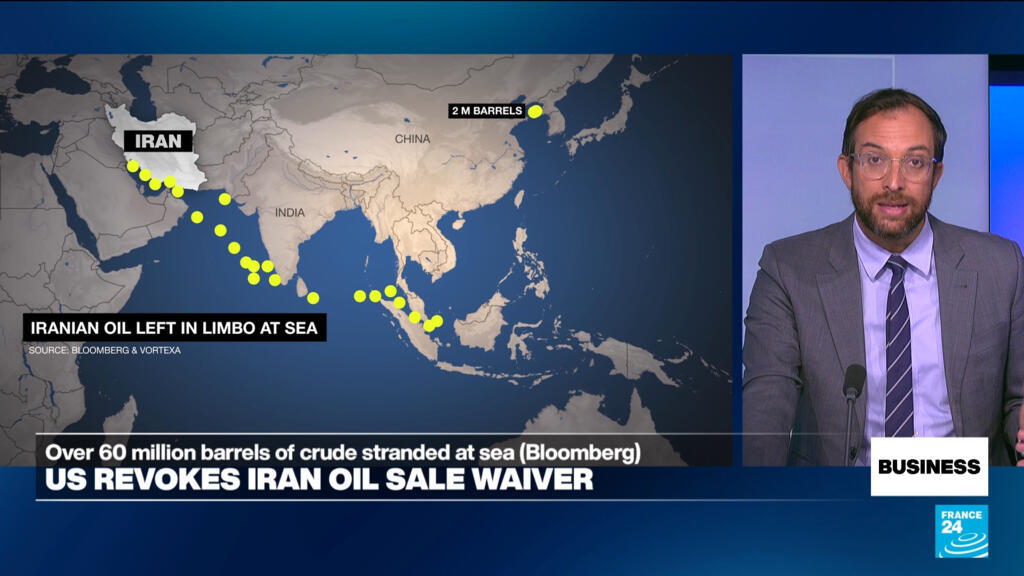
- Over 60 million barrels of Iranian crude are stranded without buyers.
- This move follows recent attacks on tankers in the Strait of Hormuz.
The United States Treasury Department has announced it will no longer permit Iranian oil sales to be conducted in US dollars on global markets. This decision comes after several tankers carrying Iranian crude were hit by projectiles while attempting to cross the Strait of Hormuz, an incident that has heightened tensions in the region.
According to a statement from the Treasury Department, this revocation of the waiver is aimed at curbing Iran’s ability to sell its oil internationally. The move effectively leaves over 60 million barrels of Iranian crude stranded at sea without any clear buyers, potentially disrupting global oil supply chains and markets.
The decision has significant implications for international trade and economic relations. By removing the US dollar as a medium for Iranian oil transactions, the US is seeking to exert greater control over Iran’s access to global financial systems. This action could also have broader geopolitical consequences, affecting countries that rely on Iranian crude imports or those involved in energy trading.
The attacks on the tankers in the Strait of Hormuz are believed to be part of a series of incidents aimed at disrupting maritime traffic and exerting pressure on Iran. These events underscore the ongoing tensions between Iran and Western powers, particularly the United States, over issues such as nuclear proliferation and regional influence.
While the immediate impact is focused on Iranian oil sales, the move could also affect other aspects of US-Iran relations. Analysts suggest that this decision may be part of a broader strategy to isolate Iran economically and diplomatically. The US Treasury Department’s statement emphasized the need for vigilance in protecting global shipping lanes and ensuring the free flow of commerce.
In response, Iranian officials have not yet issued any public statements or reactions. However, previous responses from Tehran have indicated that such actions could lead to reciprocal measures against US interests. The situation remains tense as both sides continue to assess the implications of this latest development.
The decision by the US Treasury Department is part of a larger geopolitical landscape where economic and military pressures are being used to influence Iranian behavior. As negotiations over Iran’s nuclear program continue, this move could complicate efforts towards a resolution, given the heightened tensions it has generated.