Key Takeaways
- Pakistan produces around 800,000 graduates annually.
- Entrepreneurial thinking is suggested as a solution to employment challenges.
- Habib University’s culture of entrepreneurship has inspired many startups.
Pakistan's education system faces significant challenges in generating employment for its large number of university graduates. According to recent reports, the country produces approximately 800,000 graduates each year, a figure that continues to grow with the nation’s expanding population. However, despite this influx of skilled professionals, job creation remains a persistent challenge.
The issue is exacerbated by the disruption caused by artificial intelligence (AI) and automation, which are rapidly transforming the labor market. Basic and middle-level jobs are being replaced, leaving many graduates struggling to find suitable employment or resorting to temporary positions that do not offer long-term prospects.
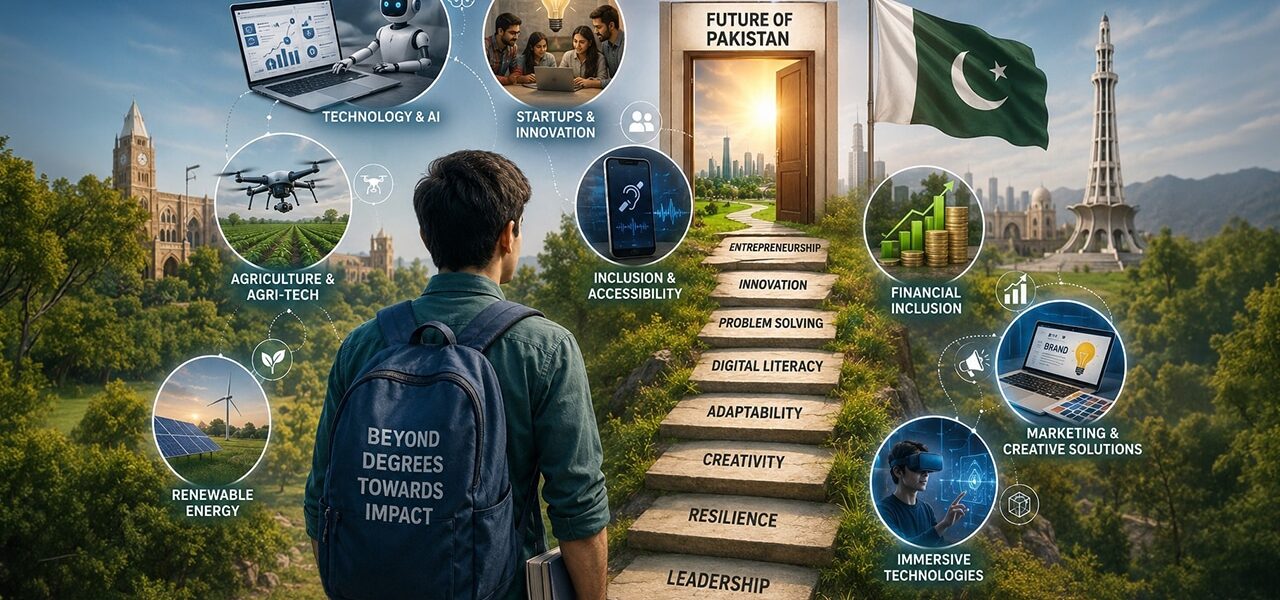
Academic institutions in Pakistan are now being urged to adapt their curricula to better prepare students for the realities of the job market. Universities can play a crucial role by fostering an entrepreneurial mindset among students, equipping them with skills necessary for self-employment and innovation. This approach is seen as a potential solution to the current employment crisis.
Habib University stands out as an example of how universities can successfully integrate entrepreneurship into their educational framework. The institution has created a culture that encourages students to start their own ventures, leading to the establishment of numerous startups in various fields. Among these are Furqan Karim Kidwai and his co-founder of Plouton AI, which uses intelligent browser-based agents to automate financial operations for businesses.
Another notable example is Habab Idrees, who co-founded Farmevo, a technology-driven platform that utilizes autonomous sensing and drone-based intelligence to improve agricultural and industrial operations. The company’s software plans and executes autonomous drone missions, capturing high-quality imagery and converting data into actionable insights through AI and machine learning.
Syed Ahsan Ahmed, another entrepreneur, founded Anomoz Softwares, a startup dedicated to addressing organizations' digital requirements. From website development to fully customized customer relationship management systems and business process solutions, the company helps enterprises modernize their operations and strengthen their digital presence.
Anusha Fatima co-founded TrashIt, a waste recovery and composting enterprise operating across Karachi, Hyderabad, Bahawalpur, and Gharo. This venture demonstrates how young entrepreneurs are addressing pressing environmental challenges through innovative business models.
These examples highlight the potential of entrepreneurship in creating new job opportunities and driving economic growth. By equipping students with entrepreneurial skills, universities can contribute significantly to Pakistan's journey toward sustainable economic development.