Key Takeaways
- Most Gulf markets ended lower on Wednesday amid heightened US-Iran tensions.
- The U.S. launched new strikes on Iranian military sites, reinstating a naval blockade and threatening further actions.
- Geopolitical uncertainty continues to affect market sentiment in the region.
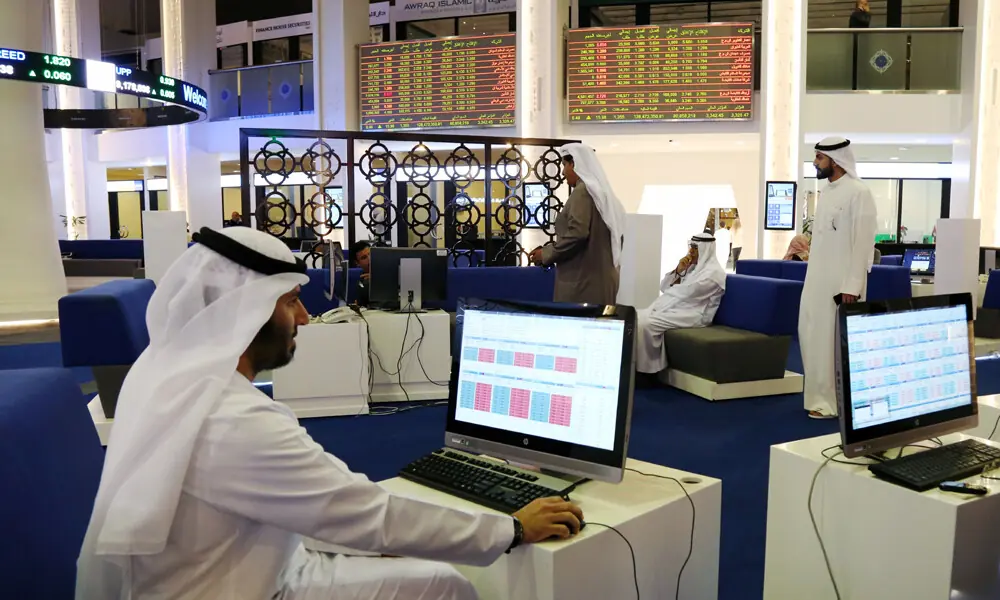
Gulf stock markets experienced a subdued performance on Wednesday as heightened tensions between the United States and Iran continued to impact investor confidence. The U.S. announced new military strikes against Iranian targets, aimed at reducing Tehran’s capacity to target commercial ships in the Strait of Hormuz. In response, Iran threatened to close all export corridors that benefit the U.S. and its allies.
Saudi Arabia's benchmark index eased 0.1%, with Saudi Aramco experiencing a 0.8% decline. The ongoing geopolitical uncertainty weighed heavily on market sentiment, particularly given the strategic importance of the Strait of Hormuz for global shipping. According to George Pavel, General Manager at Naga.com Middle East, markets are likely to remain sensitive to any further developments in the region.
The U.S. also reinstated a naval blockade on Iranian ports and carried out overnight strikes, which prompted Iran’s Islamic Revolutionary Guard Corps to issue threats against international shipping through the Strait of Hormuz. These actions have led to increased concerns about potential disruptions to global oil supplies, a key factor for Gulf markets given their heavy reliance on oil exports.
In Abu Dhabi, the index added 0.4%, while in Dubai, the main share index rose 0.4% with Emaar Properties gaining 0.4%. However, these gains were overshadowed by the broader market sentiment. The Qatar Stock Exchange remained closed following the death of former Emir Sheikh Hamad bin Khalifa Al Thani.
Outside the Gulf region, Egypt’s blue-chip index added 0.5%, marking a slight improvement in investor confidence. Meanwhile, markets in other countries such as Bahrain, Oman, and Kuwait experienced minor declines, with Bahrain easing 0.1% to 1,988, Oman down 0.4% to 7,571, and Kuwait falling 0.1% to 9,067.
The U.S. Producer Price Index data was due for release later in the day, which could provide further insights into inflation trends and monetary policy outlooks. Traders are now pricing in a 58% chance of a Federal Reserve rate hike in September, down from 76% before the CPI report, while odds of a December increase remain near 80%, according to CME FedWatch data.
The U.S. monetary policy has a significant bearing on Gulf markets, where most currencies are pegged to the dollar. The ongoing geopolitical tensions have created a volatile environment for investors, with the potential for further market fluctuations as the situation evolves.