Key Takeaways
- Keith Thomas, 48, regained the ability to move and feel his hands after a brain implant.
- The intervention caused neuronal connections to reroute through neuroplasticity.
- Thomas maintained these gains even when stimulation was turned off for three months.
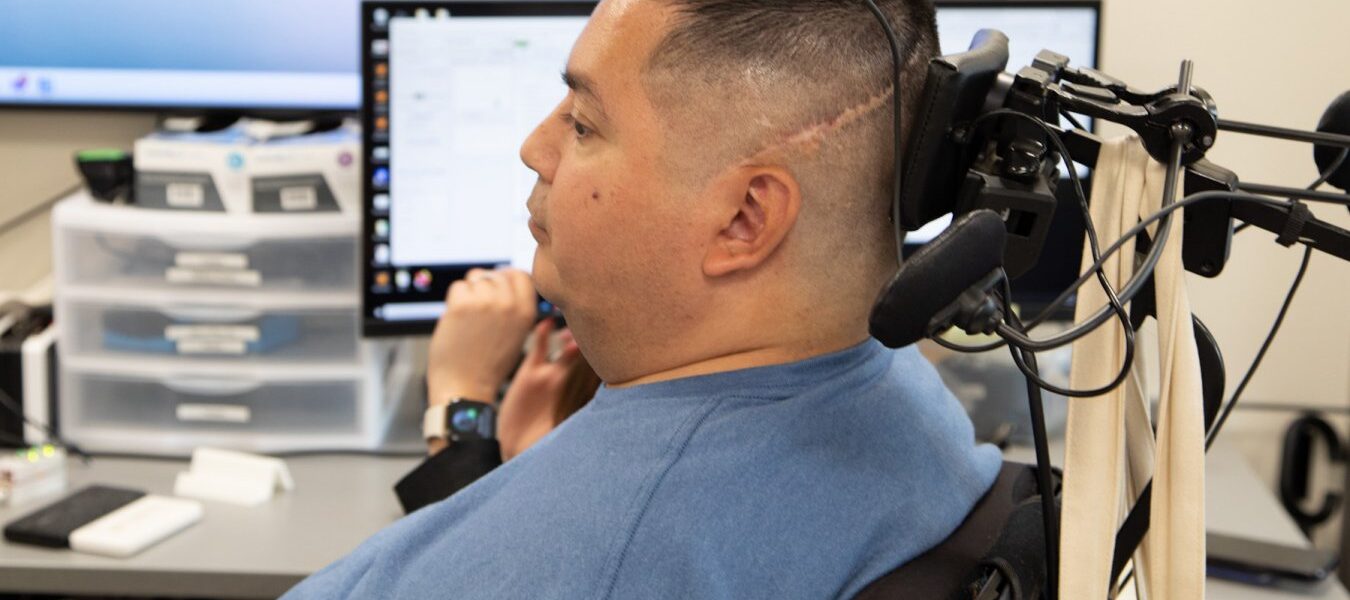
Keith Thomas, a man paralysed from the chest down due to a diving accident six years ago, has regained significant hand movement and sensation thanks to an innovative brain implant. The research, conducted by Chad Bouton at Feinstein Institutes for Medical Research in New York, demonstrates the potential of neuroplasticity in restoring function.
Thomas had no control or feeling over his limbs before the intervention. In 2023, he underwent a double neural bypass surgery where five electrodes were placed into brain regions associated with arm movements and sensation. These electrodes were connected to computer cables that interpreted Thomas's movement intentions and sent signals to electronic splints on his arms, hands, and fingers.

To enhance the sense of feeling, force sensors embedded in 3D printed wearable devices for Thomas’s hands and fingers transmitted feedback via electrical stimulations into the brain’s sensory areas. This allowed him to perform tasks such as picking up coffee cups and scratching his face with precision.
Following a series of experiments, including one where he felt objects through another person's hand, Bouton planned to stop the stimulation for about a month to test its lasting effects. However, an unexpected fire in the building forced them to extend this period by three months.

Remarkably, Thomas maintained his strength and sensation even after the stimulation was turned off. He has since been able to move individual fingers with greater accuracy, according to Bouton. In a video interview, Thomas described feeling tingling in his wrist when pressure was applied, despite being “unplugged from the computer.”
The findings suggest that this approach could promote lasting recovery of the nervous system. Sergey Stavisky at the University of California, Davis, commented on the significance: 'If these improvements persist even when the system is turned off, then the device is doing more than temporarily restoring function.'
This breakthrough offers hope for individuals suffering from paralysis and highlights the potential of neuroplasticity in regaining lost functions. The research underscores the importance of continued innovation in medical technology to improve quality of life for those with neurological conditions.
We turned everything off completely, for many months, and yet he’s maintained these gains.
Chad Bouton, Feinstein Institutes for Medical Research
He's now also controlling individual fingers with even more accuracy, so that's big.
Chad Bouton, Feinstein Institutes for Medical Research