Key Takeaways
- The Rawalpindi Chamber of Commerce and Industry (RCCI) calls for stronger ties between industry and academia.
- This collaboration aims to drive a knowledge-based economy, as discussed during an interactive session at NYU.
- Federal Minister Ahsan Iqbal and Pakistan’s Ambassador Rizwan Saeed Sheikh also participated in the event.
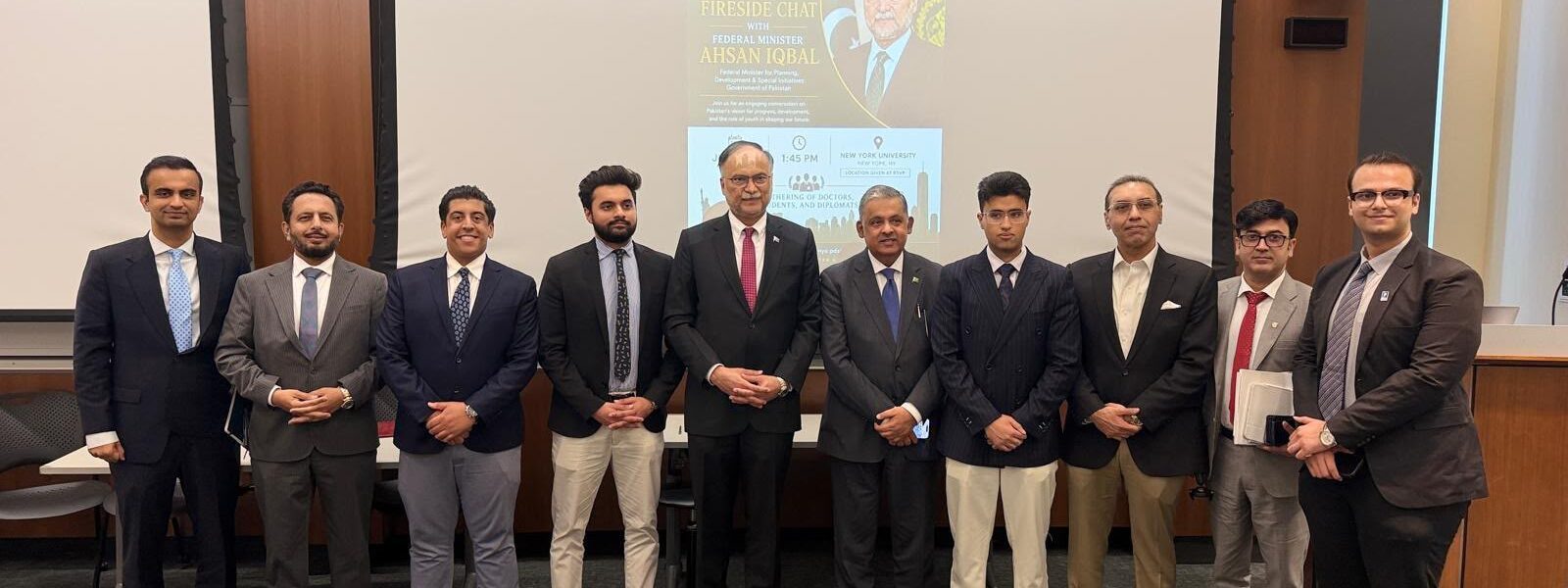
The Rawalpindi Chamber of Commerce and Industry (RCCI) has called for enhanced collaboration between industry and academia to drive a knowledge-based economy. This call was made during an interactive session held at New York University (NYU), where RCCI President Usman Shaukat participated alongside Federal Minister for Planning, Development & Special Initiatives, Professor Ahsan Iqbal, and Pakistan’s Ambassador to the United States, Rizwan Saeed Sheikh.
According to a statement from Associated Press Of Pakistan, the session aimed at fostering a dialogue between industry leaders and academic experts. Shaukat emphasized the importance of bridging the gap between theoretical knowledge and practical application in order to boost economic growth and innovation.
Professor Iqbal highlighted the role of academia in providing cutting-edge research that can be directly applied by industries. He stated, 'Collaboration is key to ensuring that our academic institutions are not only producing world-class research but also contributing effectively to the industrial sector.'
Ambassador Sheikh added, 'This collaboration will help us leverage the best practices from around the globe and tailor them to meet the specific needs of Pakistan's industries.' He further noted that such initiatives can lead to the development of new technologies and processes that could drive economic transformation.
The session was part of a broader effort by the government to promote knowledge-based industries. Minister Iqbal explained, 'We are committed to creating an environment where businesses and universities can work together seamlessly to foster innovation and create jobs.'
RCCI President Usman Shaukat echoed these sentiments, stating that such collaborations could lead to the creation of a more dynamic and competitive economy. He added, 'By working closely with academia, we can ensure that our industries are at the forefront of technological advancements and global market trends.'
The session also discussed potential areas for collaboration, including joint research projects, internships, and training programs. These initiatives aim to equip students with practical skills needed in the job market while providing businesses with a pipeline of skilled talent.
Following the session, participants agreed that such collaborations could significantly enhance Pakistan's economic competitiveness on the global stage. They emphasized the need for ongoing dialogue and regular interaction between industry leaders and academic institutions.
'Collaboration is key to ensuring that our academic institutions are not only producing world-class research but also contributing effectively to the industrial sector.'
Professor Ahsan Iqbal, Federal Minister for Planning, Development & Special Initiatives
'This collaboration will help us leverage the best practices from around the globe and tailor them to meet the specific needs of Pakistan's industries.'
Rizwan Saeed Sheikh, Pakistan’s Ambassador to the United States