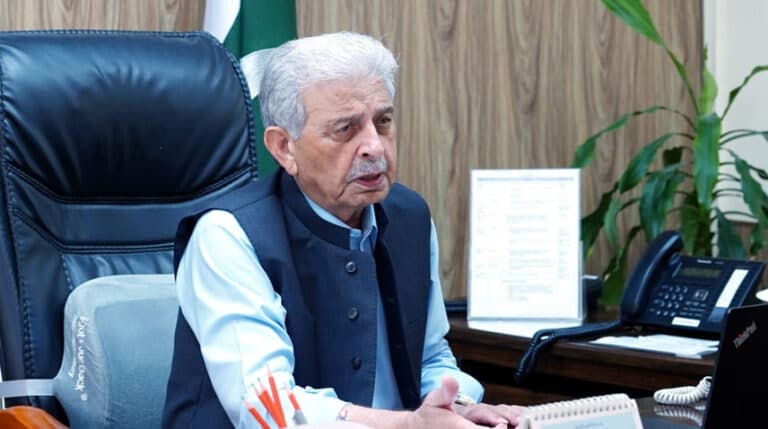
Professor Ahsan Iqbal addressed the opening session of an international conference in Islamabad to discuss global challenges. The United Nations Office for Outer Space Affairs (UNOOSA) collaborated on the organisation of the event.
Iqbal stated that Pakistan carries a disproportionate burden from climate change despite contributing less than 1 per cent to global greenhouse gas emissions. Economic losses from floods in 2022 and 2025 exceeded $30 billion, according to the professor.
International financial institutions and partners failed to provide sufficient new grant financing for recovery and reconstruction efforts. Repurposing loans previously approved for health and education is inconsistent with the principles of climate justice, Iqbal said.
Pakistan successfully launched 5 satellites over the last 18 months. Space-based information must become an integral part of national development planning for critical infrastructure like hospitals, roads and bridges.
Developing countries affected by climate disasters must receive fair and accessible financial assistance. Pakistan should create greater opportunities for young people, especially women, in geospatial technologies and space science.
Iqbal urged Pakistan to advocate for greater regional cooperation and information exchange regarding climate-related risks, mountain systems and shared rivers.