Key Takeaways
- Goldman Sachs predicts oil prices could rise to $120 a barrel if shipping disruptions in the Middle East increase.
- Recent events have heightened the risk of shipping disruptions in the Strait of Hormuz, affecting oil markets.
- China is expected to stabilize the crude market by reducing imports, but not in natural gas and refined petroleum products.
Goldman Sachs has warned that oil prices could rise to as much as $120 a barrel if attacks on shipping in the Middle East increase, according to a report by Bloomberg. The co-head of global commodities research at Goldman Sachs highlighted that recent events suggest the risk of shipping disruptions expanding and intensifying has become a significant concern for oil markets.
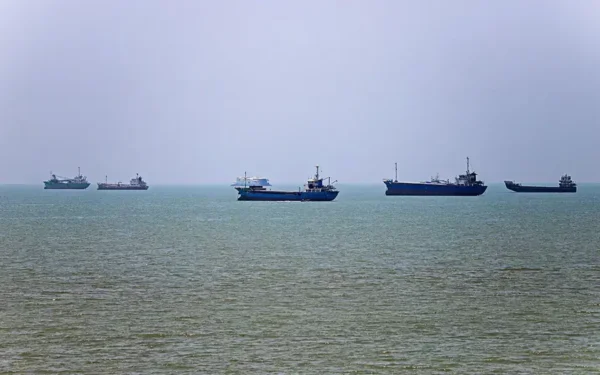
Crude prices have already climbed to their highest level since July, reaching over $97 a barrel, as the United States continues its blockade of the Strait of Hormuz. Washington has recently attacked Iranian tankers, while Tehran has declared a new restricted zone outside the waterway, further escalating tensions.
Goldman Sachs maintains an upside scenario of $120 a barrel if disruptions around the Strait of Hormuz persist, while a downside scenario of $80 a barrel is envisaged if exports from the region return to normal. The prolonged standoff has pushed up a broad range of energy prices, with natural gas and petroleum products recording stronger gains than crude oil.
The bank recommends that investors consider positions in European natural gas and refined oil products to hedge against geopolitical risks. China is expected to remain a stabilizing force in the crude market by reducing imports in response to higher prices, according to Goldman Sachs. However, China is not expected to play the same role in natural gas and refined petroleum products.
The company notes that the prolonged standoff has had a significant impact on various energy prices. Natural gas and petroleum products have recorded stronger gains than crude oil, while diesel prices have more than doubled this year. These factors highlight the complex interplay between geopolitical tensions and energy markets.
Goldman Sachs' analysis underscores the vulnerability of global energy markets to geopolitical events, particularly those affecting the Strait of Hormuz. The company's recommendations aim to help investors navigate the uncertainties in the market, given the potential for further price volatility.