Key Takeaways
- Lahore topped the global pollution ranking with an air quality index of 410.
- PM2.5 concentration in Lahore is 45.2 times the World Health Organisation’s annual guideline value.
- Health risks include serious complications from long-term exposure to air pollution.
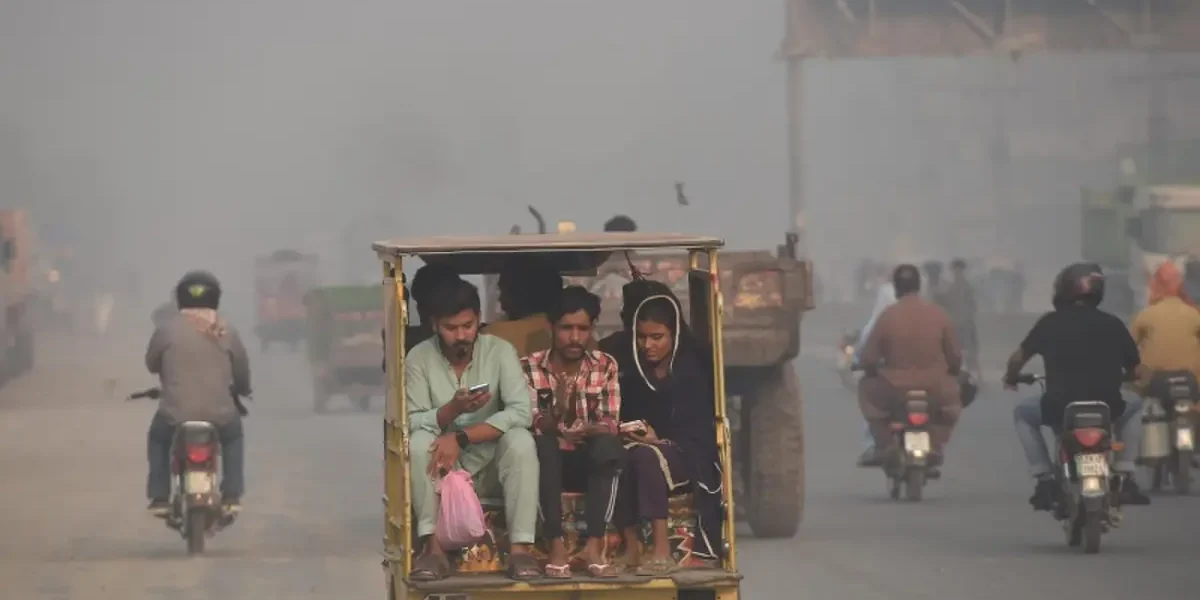
Lahore has been ranked as the world’s most polluted city, with its air quality classified as ‘hazardous’ according to the air quality monitoring platform IQAir. The city’s air quality index (AQI) reached 410, placing it at the top of the list on Friday morning.
The provincial capital was the only Pakistani city to rank among the 20 most polluted cities on Friday morning, with an AQI of 410. Karachi, another major city, had an AQI of 110, ranking 21st on the list.

The air quality in Lahore is particularly concerning due to the high concentration of PM2.5, which is 45.2 times the World Health Organisation’s annual guideline value. PM2.5 refers to fine inhalable particles that can enter the circulatory system and even the brain, causing serious health complications if long-term exposure occurs.
According to IQAir, the air quality in Lahore is classified as ‘very unhealthy’, with the PM2.5 concentration being a major health threat. The provincial government’s air quality monitoring platform recorded an AQI of 339 for Lahore at 11am on Thursday, also classifying the air as ‘very unhealthy’.
Human rights activist Sheikh Saqib reported that both his children were suffering from throat infections due to smog. He criticized the government for what he described as empty claims about measures to curb air pollution. Saqib also stated that school attendance could drop by half as parents stopped sending their children to school amid deteriorating air quality.
Saqib disputed the chief minister’s claims that smog had been controlled over the past three years, saying he continued to witness crop burning while travelling on motorways towards Islamabad and Karachi. He also noted that vehicles emitting smoke are still running on Lahore’s roads, questioning the effectiveness of the government’s measures to tackle air pollution.
The phenomenon of air pollution in Lahore is attributed mainly to industrial emissions, vehicular pollution, stubble burning, and air movement. The city, especially in the winter months, deals with smog, which has become one of the most pressing public health and environmental crises facing Pakistan.
The difference between the readings on the two platforms may be due to variations in monitoring stations, averaging periods, and methodologies. However, both indicated severe air pollution in the provincial capital. The city’s air quality map, as shown by IQAir, highlights the extent of the pollution.