Key Takeaways
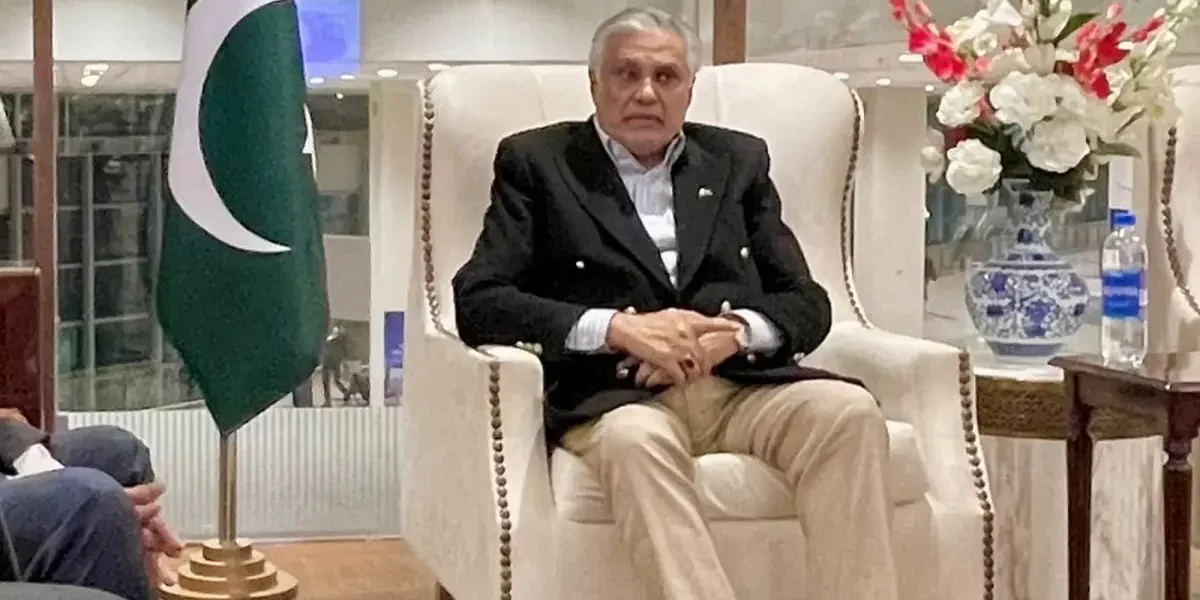
- Deputy Prime Minister and Foreign Minister Ishaq Dar departed for Istanbul to attend R4 and R4+E3 foreign ministers' meetings.
- The R4 group includes Pakistan, Saudi Arabia, Turkey, and Egypt, while the E3 countries are the UK, France, and Germany.
- Discussions will focus on regional and international developments, including the Palestinian issue and the Russia-Ukraine war.
Deputy Prime Minister and Foreign Minister Senator Mohammad Ishaq Dar has embarked on a diplomatic mission to Istanbul, Turkey, for meetings with foreign ministers from the R4 and R4+E3 groups. The R4 group, comprising Pakistan, Saudi Arabia, Turkey, and Egypt, will convene first, followed by an expanded meeting with the E3 countries—Britain, France, and Germany.
According to the Foreign Office, the R4 meeting will provide an opportunity for the participating foreign ministers to exchange views on key regional and international developments. The R4+E3 meeting will bring together foreign ministers from all seven countries for the first time in this format.
The discussions will focus on key regional developments, including the Palestinian issue, developments in Yemen, and ways to end the Russia-Ukraine war. The meetings are aimed at exploring coordinated diplomatic approaches to address shared challenges and promote regional peace and stability.
During his visit, Dar is also scheduled to hold bilateral meetings with his counterparts. The E3 was established more than 20 years ago to advance diplomatic coordination over Iran’s nuclear programme, while the R4 was formed this year to bring together Egypt with the signatories to the Mecca Defence Agreement.
Top European diplomats will hold talks in Istanbul with their counterparts from Turkey, Saudi Arabia, Pakistan, and Egypt. The meeting, initiated by Ankara, will discuss the Palestinians, developments in Yemen, and the Strait of Hormuz, among other issues.
Turkish Foreign Minister Hakan Fidan will chair the meeting, emphasizing the importance of regional security and cooperation. He will stress that regional countries should assume responsibility for their security and prioritize strengthening cooperation mechanisms based on regional ownership.
Fidan will also highlight the need to increase international pressure on Israel in response to its settlement expansion and the encouragement of settler terrorism. He will also underline Turkey’s support for Saudi Arabia’s security in the face of Houthi attacks and the need for permanent freedom of navigation in the Hormuz and Bab el-Mandeb Straits.
Unrest in the Black Sea will also be a key focus, with Fidan pointing to Turkey’s ongoing warnings and proposals to prevent the Russia-Ukraine war from spreading to the Black Sea.