Key Takeaways
- A dozen vessels transited the Strait of Hormuz over the weekend, down from 35 the prior weekend.
- Iran’s Revolutionary Guards claim a supertanker was struck by mines in the strait.
- Middle Eastern producers continue to export oil, though traffic has dwindled.
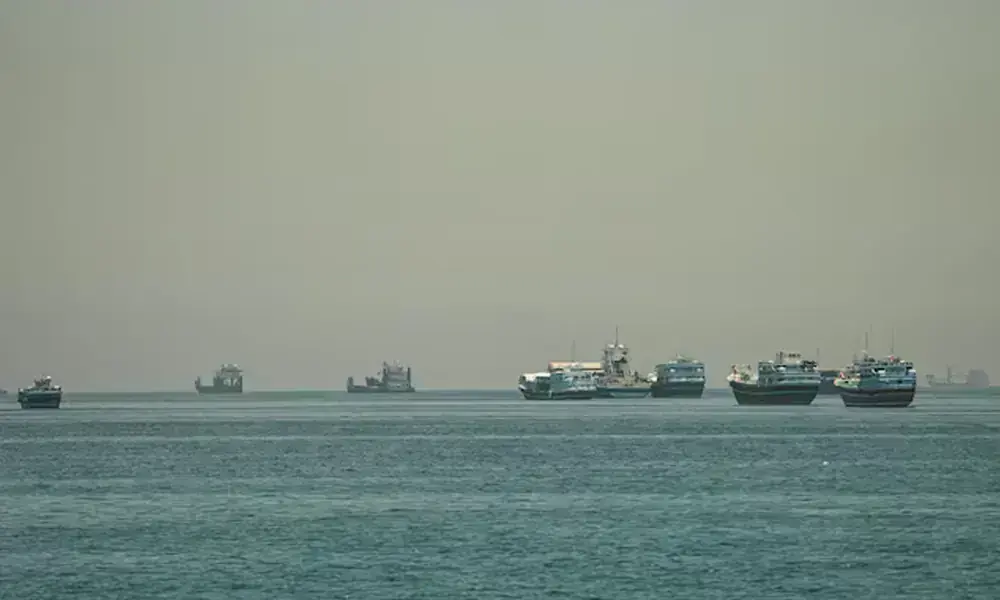
A dozen commodity vessels transited the Strait of Hormuz over the weekend, down significantly from 35 the previous weekend, according to shipping data.
The Strait of Hormuz, a critical waterway for global oil and gas transportation, has seen its traffic dwindle to a trickle, with only four vessels — two tankers carrying refined oil products and two empty carriers for bulk goods and gas — exiting the strait on Sunday.
Two small-sized oil tankers entered the Gulf, adding to the sparse traffic. Before the US-Israeli war with Iran began on February 28, the strait typically handled about 125 large, commercial vessels per day.
Iran’s Revolutionary Guards have reported that a supertanker was struck by mines in the Strait of Hormuz, though no further details were provided.
Despite the reduced traffic, Middle Eastern producers continue to export oil, with four vessels leaving the Gulf on Saturday, carrying agricultural products, liquefied petroleum gas, and fertiliser.
An empty very large gas carrier also entered the Gulf, further indicating that while traffic has decreased, the region remains active.
The US and Iran remain in a stalemate, with Iran conveying conditions to re-engage in talks and end the ongoing conflict.
The Strait of Hormuz is a vital conduit for a fifth of the world’s oil and liquefied natural gas, making its reduced traffic a significant concern for global energy markets.