Key Takeaways
- Asian share markets rose, with tech stocks leading the gains.
- Oil prices declined amid reports of increased supply from the Middle East.
- US Federal Reserve's hawkish stance on interest rates continued to impact bond markets.
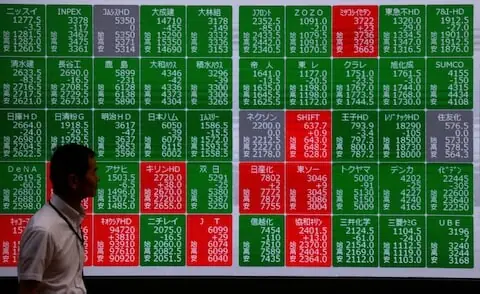
Asian share markets saw a modest rise on Monday, with technology stocks leading the gains. The MSCI Asia-Pacific index, excluding Japan, gained 0.8%, while the broader index rose 0.6%. South Korea’s tech-heavy Kospi index climbed 1.5%, reflecting the sector's resilience.
The positive sentiment in tech stocks was bolstered by the continued demand for data by artificial intelligence (AI), which supports chipmakers. This demand is driving the performance of semiconductor companies in the region.
Oil prices, however, experienced a downturn, with Brent crude falling 2.1% to $101.63 a barrel, and US crude dropping 2.1% to $98.15. Reports suggested that more oil was being exported from the Middle East, despite ongoing conflicts in the Gulf, contributing to the decline.
The decline in oil prices was further supported by data from Kpler, which showed that Iran's oil exports had recovered to over 4 million barrels per day in September, up from 2.4 million barrels per day in August, the lowest since at least 2013.
In Europe, futures markets also showed signs of recovery, with the EUROSTOXX 50 and DAX futures rising 0.4%, while FTSE futures gained 0.2%. The S&P 500 and Nasdaq futures also saw modest gains, firming 0.4% and 0.6% respectively.
Bond markets remained under pressure, with US 2-year yields jumping 36 basis points in the past two weeks to 4.7604%. Analysts at Bank of America (BofA) noted that tightening cycles are generally front-loaded, and the Federal Reserve is unlikely to stop after one hike. They predicted two more hikes, in October and December.
Central banks in the EU, UK, Japan, Australia, and New Zealand are also expected to tighten monetary policies by year-end. The Swiss National Bank, Sweden’s Riksbank, and Norges Bank will hold policy meetings on Thursday, but are seen holding steady for now.
The euro remained flat at $1.1480, having shed almost 1% last week as the dollar gained broadly. Deficit worries also weighed on bond markets, with the risk premium on French debt spiking to its widest since the eurozone debt crisis. German debt could come under pressure later on Monday after the conservative party suffered its worst election results since 1949.
Admiral Brad Cooper, head of US Central Command, mentioned the volume of crude oil, cargo, and liquefied natural gas (LNG) shipments as factors influencing oil prices. The ongoing geopolitical tensions in the Gulf region and the potential for increased supply from the Middle East continue to impact global oil markets.