Key Takeaways
- Federal Minister Ahsan Iqbal calls for $100 billion in exports by 2035.
- CPEC Phase-II focuses on business-to-business cooperation and industrial development.
- Government aims to send 1,000 agricultural experts to China for training.
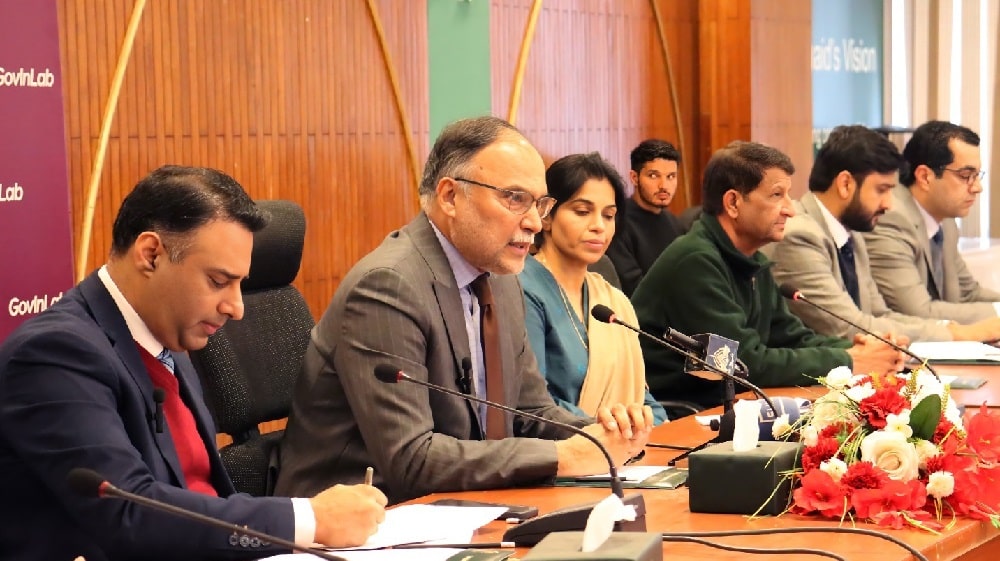
Federal Minister for Planning and Development Ahsan Iqbal has emphasized the urgent need for Pakistan’s economy to reach a $100 billion export target by 2035, during a meeting in Islamabad to review the implementation of the China-Pakistan Economic Corridor (CPEC) Action Plan 2025–2029.
Speaking at the meeting, Iqbal highlighted that Pakistan’s economic growth hinges on increased exports, stressing that the country’s economy needs to ‘heat up’ rather than its physical infrastructure.
The minister reviewed the progress made during the first year of the CPEC Action Plan and discussed steps to accelerate work on the agreed priorities, with a particular focus on CPEC Phase-II.
CPEC Phase-II, which builds on the first phase, is expected to focus on business-to-business cooperation, industrial development, agricultural modernization, minerals, human capital, and technology, aligning with the five pillars of URAAN Pakistan: Growth, Livelihood, Innovation, Green Economy, and Openness.
The Growth Corridor aims to strengthen Pakistan’s industrial and agricultural capacity, while the Livelihood Corridor will support social development and less-developed regions. The Innovation Corridor will focus on expanding Pakistan’s IT capabilities and developing modern technological skills among young people.
Ahsan Iqbal also highlighted the government’s initiative to send 1,000 agricultural experts to China for training in modern agricultural technologies. He stated that this program will help develop skilled human resources and support a ‘Green Revolution 2.0’ through better seeds, farm mechanization, efficient water use, and climate-resilient crops.
The minister called for stronger government-private sector cooperation to improve competitiveness and make ‘Made in Pakistan’ a globally recognized brand. He emphasized the need for the private sector to take a leading role in realizing the economic potential of CPEC Phase-II, while the government should provide an environment that supports investment and business partnerships.
Iqbal stressed that for Pakistan’s future and a better tomorrow for its youth, the country cannot compromise on its economic development. He directed ministries to ensure timely implementation of the CPEC Phase-II action plan, underscoring the importance of this initiative for the nation’s economic growth.