Key Takeaways
- Domestic gas production in Pakistan is projected to decline from 2,634 million cubic feet per day to 1,266 million cubic feet per day by 2034.
- The share of domestic gas in total supply is expected to drop from 73% to 25% over the same period.
- The government is considering restructuring gas distribution companies to improve sector efficiency.
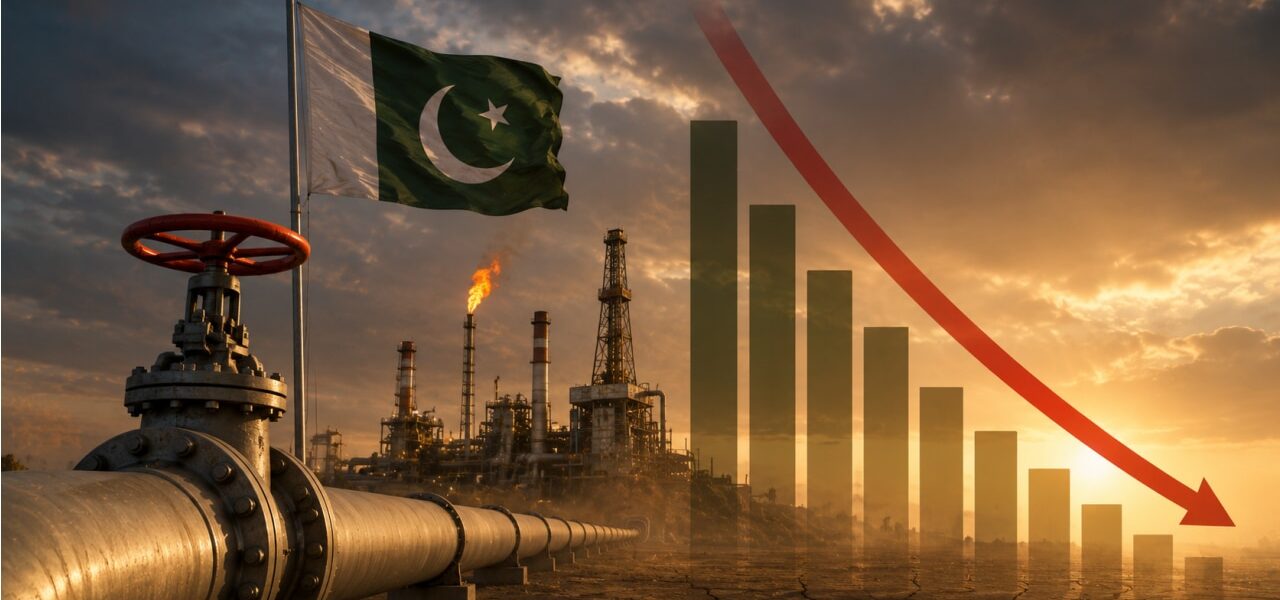
Pakistan’s domestic gas production is set to halve by 2034, according to a new study by Pakistan’s Credit Rating Agency (PACRA). The report projects a significant decline in indigenous gas production from approximately 2,634 million cubic feet per day in fiscal year 2024 to around 1,266 million cubic feet per day by 2034.
This decline is expected to reduce the share of domestic gas in Pakistan’s total supply from about 73% to only 25% over the same period, increasing the country’s reliance on imported energy sources.
The weakening demand for liquefied natural gas (LNG) has further exacerbated the situation. LNG imports fell from about 6 million tonnes to approximately 3.7 million tonnes during the first nine months of fiscal year 2026, as industrial and power sector consumers increasingly shifted toward solar energy and other alternatives.
While the proposed structural reforms could improve the sector’s long-term efficiency, they are unlikely to address the immediate financial challenges faced by the gas distribution companies, Sui Northern Gas Pipelines Ltd. and Sui Southern Gas Company Ltd.
These companies are struggling with liquidity constraints due to delays in tariff adjustments, weak recoveries, and rising working capital requirements. Their financial health remains a major concern, and they may need to rely more on borrowing to meet their operational needs.
The LPG market offers a more positive outlook. Local LPG production increased by about 15.5% in fiscal year 2026, while imports declined 12% year over year to approximately 1.5 million tonnes. Additional domestic production capacity of about 136,000 tonnes annually could further strengthen local supplies.
However, the government’s fiscal year 2027 import target of about 1.6 million tonnes indicates that Pakistan will remain significantly dependent on imported LPG. LPG prices and industry margins will remain vulnerable to external factors, including international contract prices, geopolitical developments, freight costs, and fluctuations in the rupee dollar exchange rate.
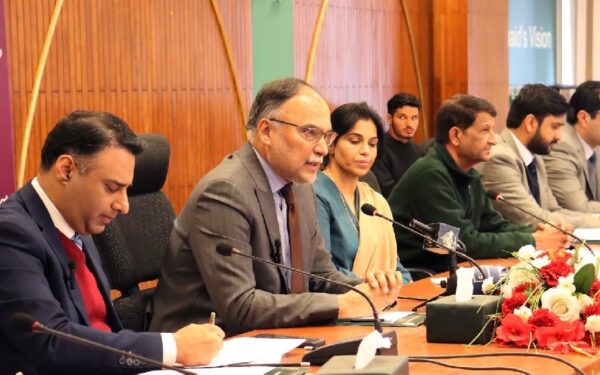
In response to these challenges, the government, with support from the World Bank, is considering a major restructuring of SNGPL and SSGCL. The proposed model would separate their transmission and distribution operations and create one National Gas Transmission Company alongside four provincial distribution companies.
The reform package would also introduce a new multiyear tariff mechanism, third-party access to gas pipelines, and a gradual opening of gas trading to private sector companies. Under the proposal, private players could potentially receive about 20% of gas volumes during the first year. According to the PACRA study, these measures could improve cost transparency, reduce unaccounted for gas losses, and strengthen collections, helping to address the sector’s financial problems.