Key Takeaways
- Commercial banks have approved Rs. 160 billion in housing loans under the Prime Minister's scheme.
- The program aims to address Pakistan’s estimated 10 million housing shortage and assist low-income families.
- Borrowers benefit from a concessional markup rate of 5 percent, with government support for participating banks.
Commercial banks have approved Rs. 160 billion in housing loans under the Prime Minister’s Wazir e Azam Apna Ghar Program, according to Adviser to the Finance Minister Adnan Pasha. Loan disbursements are currently underway for successful applicants.
Pasha stated that the program is helping address Pakistan's estimated housing shortage of around 10 million units while enabling low-income families to own homes through subsidized financing. He noted that borrowers benefit from a concessional markup rate of 5 percent, which helps create wealth for people at the bottom of the economic pyramid.
The Ministry of Finance is underwriting up to 10 percent of potential loan losses for participating banks and providing a markup subsidy for 10 years to make housing finance more affordable. However, Pasha highlighted that the scheme currently lacks an insurance component to protect homeowners against climate-related disasters and other unforeseen risks.
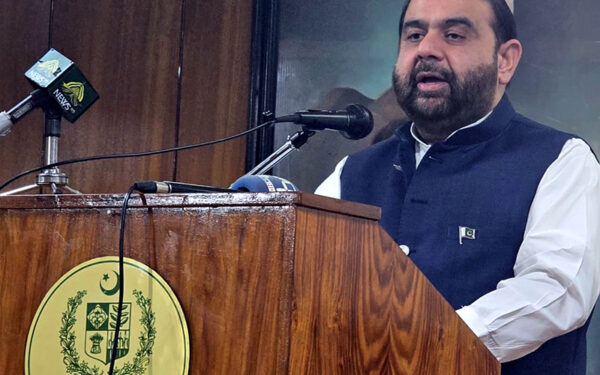
Addressing the First International Insurance Conference in Karachi, Pasha invited the insurance industry to propose suitable products, assuring government support through an enabling regulatory framework. He also announced plans to accelerate the adoption of electric mobility by introducing 2 million electric motorcycles, citing that Pakistan has around 3 million registered motorcycles consuming fuel costing the country approximately $8 billion annually.
The government is supporting the shift towards electric vehicles through subsidies and zero markup financing, although production and supply constraints remain a challenge. Additionally, Pasha highlighted support for agriculture with the recent launch of the Zarqaizi Scheme to provide digital agricultural loans through 21 banks in partnership with the Pakistan Banks Association and SUPARCO.
The initiative uses satellite monitoring and real-time data to track how agricultural loans are utilized, improving transparency and efficiency. Insurance Association of Pakistan Chairman Shoaib Javed Hussain addressed the conference, noting that Pakistan’s insurance penetration remains well below regional and global levels, accounting for only 0.9 percent of GDP compared with around 4 percent in neighboring economies and about 6 percent in developed countries.
He urged greater innovation, stronger public-private collaboration, and faster regulatory reforms, particularly in crop and health insurance, to expand insurance coverage across the country.