Key Takeaways
- Prices of Iranian and Quetta tomatoes remain high at Rs450-500 per kg in Karachi.
- Traders are reluctant to sell Iranian tomatoes due to their shorter shelf life and taste differences.
- Local Balochistan crops are insufficient to meet the demand, leading to continued price hikes.
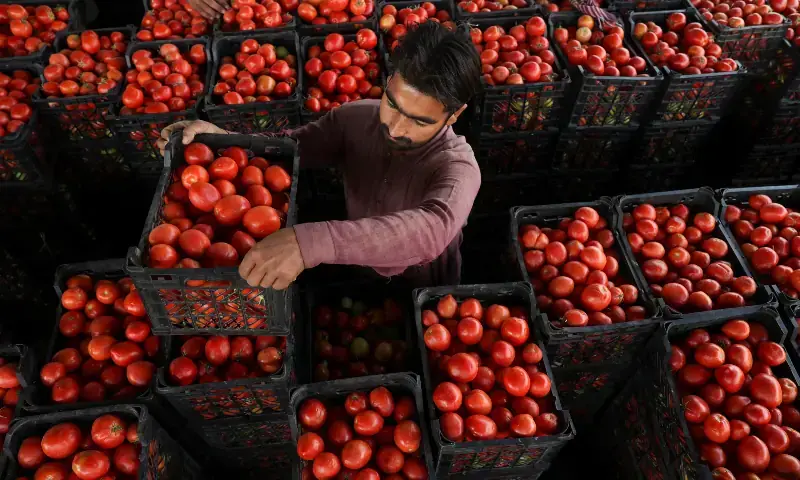
Consumers in Karachi continue to face high prices for tomatoes, with retailers charging Rs450-500 per kg. This surge has left many shoppers feeling the pinch as they struggle to afford even small quantities of the fruit.
Traders are reported to be reluctant to sell Iranian and Quetta tomatoes, citing their shorter shelf life and taste differences compared to local varieties from Balochistan. According to Younus Soomro, a tomato grower and former vice-president of the Karachi Chamber of Commerce and Industry (KCCI), these foreign tomatoes often arrive damaged and are not up to the standard of Sindh or Balochistan crops.
Despite the arrival of Iranian tomatoes, their limited quantity and poor condition have failed to alleviate the situation. Soomro noted that on average, only 10 containers of Iranian tomatoes reach Karachi daily, with about 30% damage upon arrival. This has left local markets largely dependent on Balochistan’s crop, which is insufficient to meet the high demand.
The tomato season in Sindh has just begun, and crops are expected to be harvested by mid-September. However, this is too late to address the current shortage, as the previous crop ended in April, and local supplies from Khyber Pakhtunkhwa and Punjab usually arrive in May-June but remain confined within these provinces.
The situation has been exacerbated by a significant drop in vegetable exports. According to data from Pakistan Bureau of Statistics (PBS), total vegetable exports for fiscal year 2025-26 fell drastically to 594,104 tonnes ($163m) from 1.448 million tonnes ($367m) the previous year. This decline is attributed to a lack of vessels for exporting potatoes and onions due to the Gulf War, as well as the suspension of exports to Afghanistan and CIS countries following the closure of the Afghan border.
The weight of onions and potatoes in total vegetable exports has caused a steep fall in earnings from these commodities. As a result, consumers are paying higher prices for tomatoes, with some reporting that they can only get two to three small-sized tomatoes for Rs50-60.
While Iranian tomatoes were available at over Rs300 per kg earlier this month and Rs120-160 in the third week of June, prices have now soared to Rs450-500. This trend is expected to continue until local crops become more abundant later in the year.
Traders are also reported to be keeping prices high for Balochistan tomatoes at Rs400 per kg for small-size and unripe fruit, further contributing to the overall price hike.