LIVE Watch Now
Breaking
China Delivers World’s Fastest Self-Discharging VesselIran threatens to retaliate against US if nuclear sites targetedRiots break out in Buenos Aires after Argentina’s World Cup defeatTesla Expands Robotaxi Service to Tampa and OrlandoGazan amputee footballers recreate World Cup finalProfessor Dr. Muhammad Khurram Assumes Additional Role as Vice Chancellor RMULebanese President Urges Full Israeli Withdrawal During Trump MeetingPeak Design introduces Field Bracket with built-in finder tagSubstack Introduces AI Detection Tool to Combat Fake ContentTrump pledges US support for Lebanon during White House meetingPAC Orders Inquiry into 33-Year Delay of Hawks Bay SchemeABAD delegation meets Karachi police chief to discuss law & orderSuspect arrested, illegal pistol recovered by policeApple to Launch ‘Upgrade’ Program for Leasing iPhones, Macs and iPadsKarachi Mayor Renames Regal Chowk for Rabi ul Awwal CelebrationsAzerbaijan and Germany sign strategic partnership in BerlinFrench parliament approves social media ban for under-15sChief Justice Yahya Afridi Meets with UN Women and Istanbul Bar AssociationTrump announces imminent strike on Iran’s Pickaxe MountainPakistan’s DPM Dar to Lead Delegation at 33rd ASEAN Regional Forum in ManilaChina Delivers World’s Fastest Self-Discharging VesselIran threatens to retaliate against US if nuclear sites targetedRiots break out in Buenos Aires after Argentina’s World Cup defeatTesla Expands Robotaxi Service to Tampa and OrlandoGazan amputee footballers recreate World Cup finalProfessor Dr. Muhammad Khurram Assumes Additional Role as Vice Chancellor RMULebanese President Urges Full Israeli Withdrawal During Trump MeetingPeak Design introduces Field Bracket with built-in finder tagSubstack Introduces AI Detection Tool to Combat Fake ContentTrump pledges US support for Lebanon during White House meetingPAC Orders Inquiry into 33-Year Delay of Hawks Bay SchemeABAD delegation meets Karachi police chief to discuss law & orderSuspect arrested, illegal pistol recovered by policeApple to Launch ‘Upgrade’ Program for Leasing iPhones, Macs and iPadsKarachi Mayor Renames Regal Chowk for Rabi ul Awwal CelebrationsAzerbaijan and Germany sign strategic partnership in BerlinFrench parliament approves social media ban for under-15sChief Justice Yahya Afridi Meets with UN Women and Istanbul Bar AssociationTrump announces imminent strike on Iran’s Pickaxe MountainPakistan’s DPM Dar to Lead Delegation at 33rd ASEAN Regional Forum in Manila
◕ SundialUpdated 17 hours ago
Trending Stories
Pakistan

Balochistan’s Accession to Pakistan: A Legal and Historical Analysis

Balochistan’s Accession to Pakistan: A Legal and Historical Analysis

Key Takeaways

  • The Khanate of Kalat's signature on March 27, 1948, does not prove Balochistan was a fully sovereign state.
  • The region comprised multiple distinct political entities that acceded to Pakistan separately.
  • Balochistan’s current provincial structure is a modern constitutional construct.

The claim that the Khanate of Kalat's accession on March 27, 1948, signifies Balochistan as an independent state until then has been widely debated. Historical and legal scrutiny reveals this narrative to be a misrepresentation.

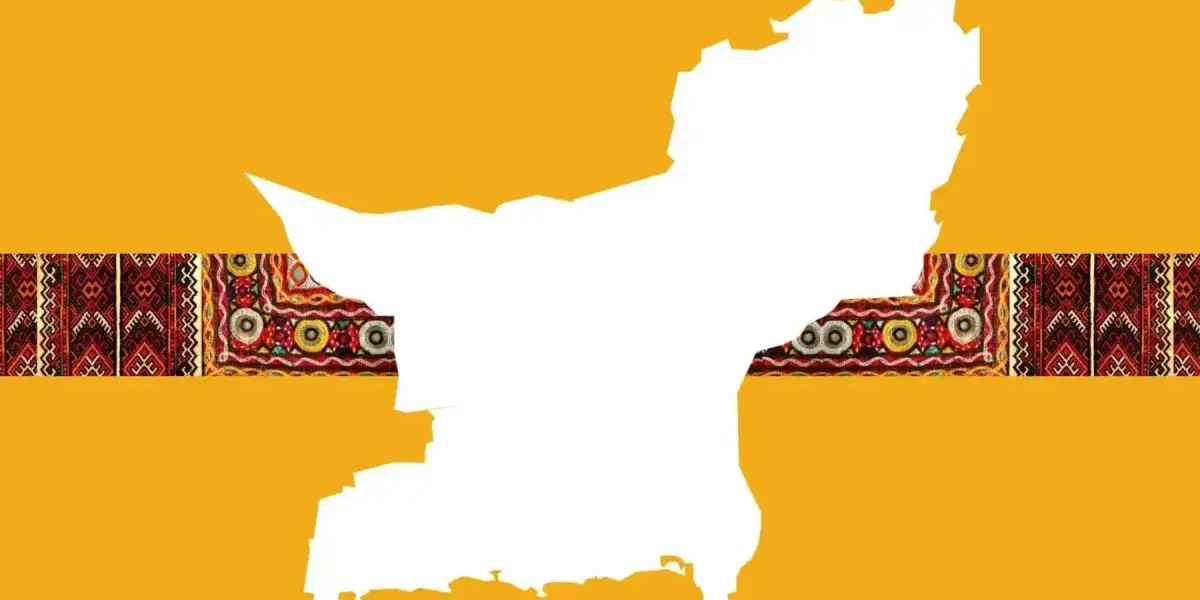
Prior to Partition in August 1947, the territories now comprising Balochistan were not unified under one sovereign entity. Instead, they consisted of distinct political entities: the Khanate of Kalat, princely states such as Makran, Kharan, and Lasbela, and directly administered British districts.

These entities acceded to Pakistan through separate Instruments of Accession. The rulers of Makran, Kharan, and Lasbela signed their accession on or around March 17, 1948, while the Khan of Kalat, Mir Ahmed Yar Khan, signed his on March 27, 1948. However, it was Muhammad Ali Jinnah who accepted this and made the accession effective on March 31, 1948.

The port of Gwadar, covering approximately 15,210 square kilometres, was not part of any accession; it was acquired by Pakistan through purchase from the Sultanate of Oman in 1958. This acquisition took place with formal handover on December 8, 1958.

The unified provincial structure familiar today is a modern constitutional construct, created by the National Assembly through the Constitution of 1973. Unlike other provinces that entered the Federation with pre-existing institutions, Balochistan underwent gradual consolidation from the short-lived Balochistan States Union (1952) to the One Unit scheme (1955).

Article 1 of the Constitution provided legal unity to these separate pieces, and Parliament retains plenary constitutional competence to reform or recalibrate this structure. This authority is derived directly from Article 239 and reinforced by the Objective Resolution, which binds the state to safeguard the integrity of Pakistan.

This analysis underscores that Balochistan’s accession to Pakistan was a complex process involving multiple entities and distinct legal instruments. The current provincial structure is not an ancient reality but a modern constitutional construct.